
In pharmaceutical, fine chemical, advanced material, food science, and lithium battery research, spray drying is a key technology for converting liquid feed into powder particles rapidly. For materials containing organic solvents, conventional water-based drying equipment often struggles to balance safety, solvent recovery, particle morphology, and batch stability. The laboratory organic solvent spray dryer is a specialized system developed for these complex conditions. Through its closed design, controlled hot gas circulation, solvent recovery capability, and fine parameter adjustment, it provides a more reliable platform for laboratory research and small-scale production.
The laboratory organic solvent spray dryer from Suzhou 023 Intelligent Equipment Co., Ltd. is designed around four core dimensions: safety, stability, high efficiency, and controllability. Equipped with a closed drying chamber and inert gas protection structure, it reduces the risk of solvent volatilization and explosion during high-temperature processes. It is suitable for organic solutions, heat-sensitive materials, oxidation-prone substances, and high-value powders. Compared with standard spray dryers, this model is particularly suited for laboratory testing, process development, parameter optimization, and sample preparation, helping researchers produce more repeatable granular products under controlled conditions.
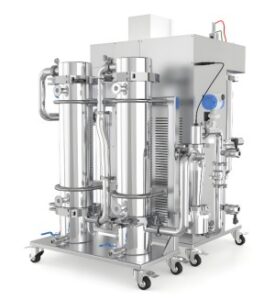
1. Working Principle: Converting Solution into Controllable Powder
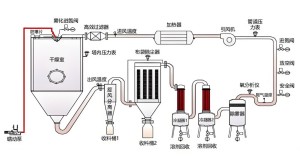
The laboratory organic solvent spray dryer disperses the feed solution into fine droplets through an atomization device. These droplets then come into contact with hot air or inert gas inside the drying chamber, causing the solvent to evaporate quickly and forming dry powder particles. The process generally includes five stages: feeding, atomization, drying, gas-solid separation, and solvent recovery.
In the feeding system, the material enters the atomization device at a stable flow rate. The atomizing structure breaks the liquid into micron-sized droplets, greatly increasing the contact area between the droplets and the hot gas stream. When the droplets enter the drying chamber, the hot gas causes the organic solvent to evaporate rapidly, and the solid solute gradually forms dry particles. The dry particles and gas stream then enter the separation system, where the powder is collected in a container while the solvent-laden exhaust gas undergoes recovery treatment to reduce emissions and improve solvent utilization.
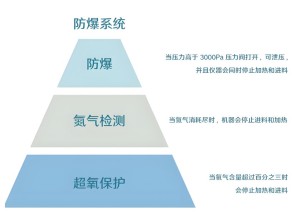
For organic solvent systems, the sealing performance and inert gas protection of the equipment are particularly important. By reducing the oxygen content inside the system and controlling the gas circulation state, the equipment lowers the possibility of forming a hazardous mixture of solvent vapor and air, thereby improving laboratory operation safety.
2. Product Advantages
2.1 Suitable for Organic Solvent Systems with Higher Safety
The laboratory organic solvent spray dryer adopts a closed design that reduces safety hazards caused by solvent volatilization. Some configurations include inert gas protection, explosion-proof electrical components, solvent recovery units, and temperature control systems, enabling stable operation with ethanol solutions, methanol solutions, acetone-based systems, and other volatile solvent materials.
2.2 Fine Parameter Adjustment for Laboratory Process Development
The equipment typically supports adjustable inlet air temperature, feed rate, atomization pressure, gas flow rate, and fan frequency. Researchers can flexibly modify drying conditions according to material properties and powder requirements, and study the influence of different parameters on particle size, moisture content, morphology, flowability, and yield.
2.3 Controllable Particle Morphology for Improved Sample Quality
By controlling the atomization effect and drying kinetics, the laboratory organic solvent spray dryer can produce powder particles with good sphericity, uniform particle size distribution, and excellent flowability. This is important for pharmaceutical intermediates, catalysts, advanced material powders, and functional additives.
2.4 Strong Solvent Recovery Capability Reduces Material Loss
After the solvent-laden exhaust gas passes through condensation, recovery, or treatment units, part of the solvent can be reused. This not only reduces operating costs but also lowers laboratory emissions, which is especially valuable for high-value materials and expensive solvent systems.
2.5 Compact Structure for Easy Laboratory Installation
Compared with large-scale industrial spray dryers, the laboratory organic solvent spray dryer is smaller and more compact, making it suitable for laboratory benches or small pilot areas. It features a highly integrated structure and clear operating procedures, allowing researchers to conduct small-scale tests and condition screening efficiently.
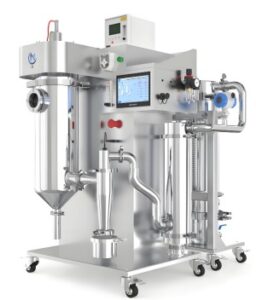
3. Technical Features
- Closed drying system to reduce solvent volatilization risks
- Inert gas protection for heat-sensitive and oxidation-prone materials
- Adjustable atomization parameters to control droplet size and particle distribution
- Precise temperature control to minimize thermal degradation
- Solvent recovery unit to improve organic solvent utilization
- High gas-solid separation efficiency to enhance powder collection
- Compact structure for laboratory testing and process development
- Intuitive operation interface for easy parameter setting and data recording
4. Application Fields
4.1 Pharmaceutical Industry
Many pharmaceutical active ingredients, intermediates, and coating solutions are sensitive to temperature and solvent systems. Organic solvent spray dryers can be used to prepare microcapsules, spherical particles, fast-dissolving powders, and inhalation formulations, helping researchers control particle size, flowability, and dissolution performance.
4.2 Fine Chemicals
Fine chemical products often have high added value, small batch sizes, and strict process requirements. The equipment can be used for drying pigments, dyes, catalysts, additives, fragrances, and resin solutions, helping enterprises verify process routes at the laboratory stage.
4.3 Advanced Material Research
In advanced materials, laboratory organic solvent spray dryers can handle ceramic precursors, lithium battery materials, superconducting materials, magnetic materials, and composite powders. By adjusting atomization and drying conditions, researchers can optimize particle structure, providing a foundation for subsequent sintering, forming, and performance testing.
4.4 Food Science
Some food extracts, functional ingredients, and nutritional supplements are heat-sensitive and may use ethanol or similar solvent systems. The equipment can complete drying at lower temperatures and in a closed environment, reducing the loss of active components.
4.5 Agricultural and Environmental Research
In research on pesticides, slow-release fertilizers, biomass materials, and environmental adsorbents, the equipment can also be used to prepare powder samples with specific particle sizes and structures, providing stable specimens for subsequent performance testing.
5. Configuration and Selection Considerations
When selecting a laboratory organic solvent spray dryer, several factors should be evaluated:
- Solvent type and explosion protection requirements: Different solvents vary in flash point, volatility, and explosion hazard, so equipment structure and electrical configuration must match the operating conditions.
- Processing capacity: Laboratory models are typically designed for research and small-scale testing; if scale-up verification is required, processing capacity and continuous operation stability should be considered.
- Temperature control range: Heat-sensitive materials require more precise low-temperature control, while some inorganic materials may need higher inlet temperatures.
- Atomization method: Different atomization structures affect droplet size, particle morphology, and applicable viscosity ranges.
- Solvent recovery capability: For high-value or low-boiling-point solvents, the recovery unit directly affects operating costs and environmental performance.
- Powder collection efficiency: Finer particles are more difficult to collect and require efficient gas-solid separation technology.
6. Why Choose a Laboratory Organic Solvent Spray Dryer
Compared with ordinary oven drying, vacuum drying, and freeze drying, the greatest advantages of spray drying are its rapid continuous operation and particle-forming capability. It can convert liquid solution directly into dry powder, shorten processing time, and reduce degradation caused by prolonged heating. For organic solvent systems, a closed laboratory spray dryer also significantly improves operational safety and solvent recovery.
For corporate R&D centers, university laboratories, testing institutions, and new process development teams, this type of equipment is not merely a drying device but also an important bridge connecting laboratory formulation research with industrial scale-up. Through stable parameter control and repeatable experimental results, researchers can identify optimal process routes more quickly and reduce uncertainty during pilot testing.
7. Suzhou 023 Intelligent Equipment Co., Ltd.: Providing Customized Support for Laboratory Drying Processes
Suzhou 023 Intelligent Equipment Co., Ltd. focuses on the R&D, manufacturing, and technical service of intelligent equipment and laboratory powder processing systems. Based on customer requirements in organic solvent spray drying, powder preparation, particle modification, and process scale-up, the company provides comprehensive support from equipment selection and solution design to installation, commissioning, and after-sales training.
For laboratory organic solvent spray dryer needs across different industries, Suzhou 023 Intelligent Equipment Co., Ltd. can recommend equipment configurations based on material properties, processing capacity, solvent type, temperature requirements, and powder specifications. This helps customers improve R&D efficiency and sample stability under real operating conditions.